A common question we see IELTS candidates ask is about their accent. They worry that their accent will affect their IELTS speaking score and wonder how much accent is important in the IELTS speaking test.
As former IELTS speaking examiners, we are going to explain it to you.
People from all over the world take the IELTS test. All of them have some kind of accent. We all. do. Kris has an accent because he comes from the northeast of England. He sounds different to Kate and to our friends from Scotland, Wales and Ireland, and our friends from different parts of the USA, Canada, Australia and New Zealand.
Your accent is part of your identity. It is part of who you are.
How is accent assessed in the IELTS speaking test?
You can find the IELTS band descriptors that the IELTS speaking examiners use online. They are available for everyone to see. They are not secret!
If you look at the section for Pronunciation, you can see that it says:
“Accent has no effect on intelligibility”
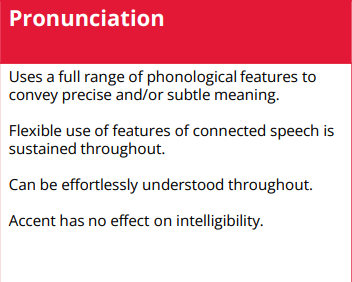
You can sound Ukrainian, or Indian, or Brazilian etc. as long as the IELTS speaking examiner understands you properly.
Find out how to improve your confidence in the IELTS speaking test
Is a British or American accent better in the IELTS speaking test?
Another question we see a lot is which accent you should use. Should you copy the British accent or the American accent?
Some IELTS candidates have studied with teachers with British or American accents, or spent a lot of time watching American or British TV shows, and they are worried about the accent they have picked up.
If you take the IELTS test at the British Council, will the IELTS speaking examiners like it if you speak with a British accent? Will they be annoyed if you use American pronunciation?
If you take the IELTS test at IDP, will the IELTS speaking examiners like an Australian accent?
The answer is that it doesn’t matter. If you pronounce words like a British person, it will be the same as if you use American, Australian, Canadian etc. pronunciation.
Use your own accent.
How can I get a good score in pronunciation in IELTS speaking
The key to getting a good score for pronunciation in IELTS speaking is that you are easy to understand
If you pronounce words incorrectly, with the wrong stress patterns and intonation, so they examiner does not understand you, you cannot score 7+ in pronunciation.
Read more about what a band 7.0 in IELTS speaking means, and why many IELTS candidates miss it
If you are frequently hard to understand, you will score 4 or 5 in pronunciation.
Make sure you understand how words and phrases sound when high level English speakers use them.
If your mother tongue/first language means you speak English with a flat intonation, or lots of unnatural pitch changes, or you stress every syllable, this will affect your pronunciation score. If the way you speak in your mother tongue affects the way you pronounce sounds, this will affect your IELTS pronunciation score.

Image by Robin Higgins from Pixabay
This is not your accent, but it is an effect of your mother tongue.
👉Use online dictionaries to check how words and phrases sound, when you learn them
👉Listen to a lot of high level English speakers and copy the stress patterns and intonation they use, as well as how they link phrases together.
👉Do dictation and short listening activities on websites like Daily Dictation and Elllo and copy the speakers.
If you want to know if your pronunciation is affecting your score for IELTS speaking, we can do a mock IELTS speaking test with you. We will do a full IELTS speaking test, and give you feedback on all four areas, including pronunciation. Get in touch if you think this would help you.